


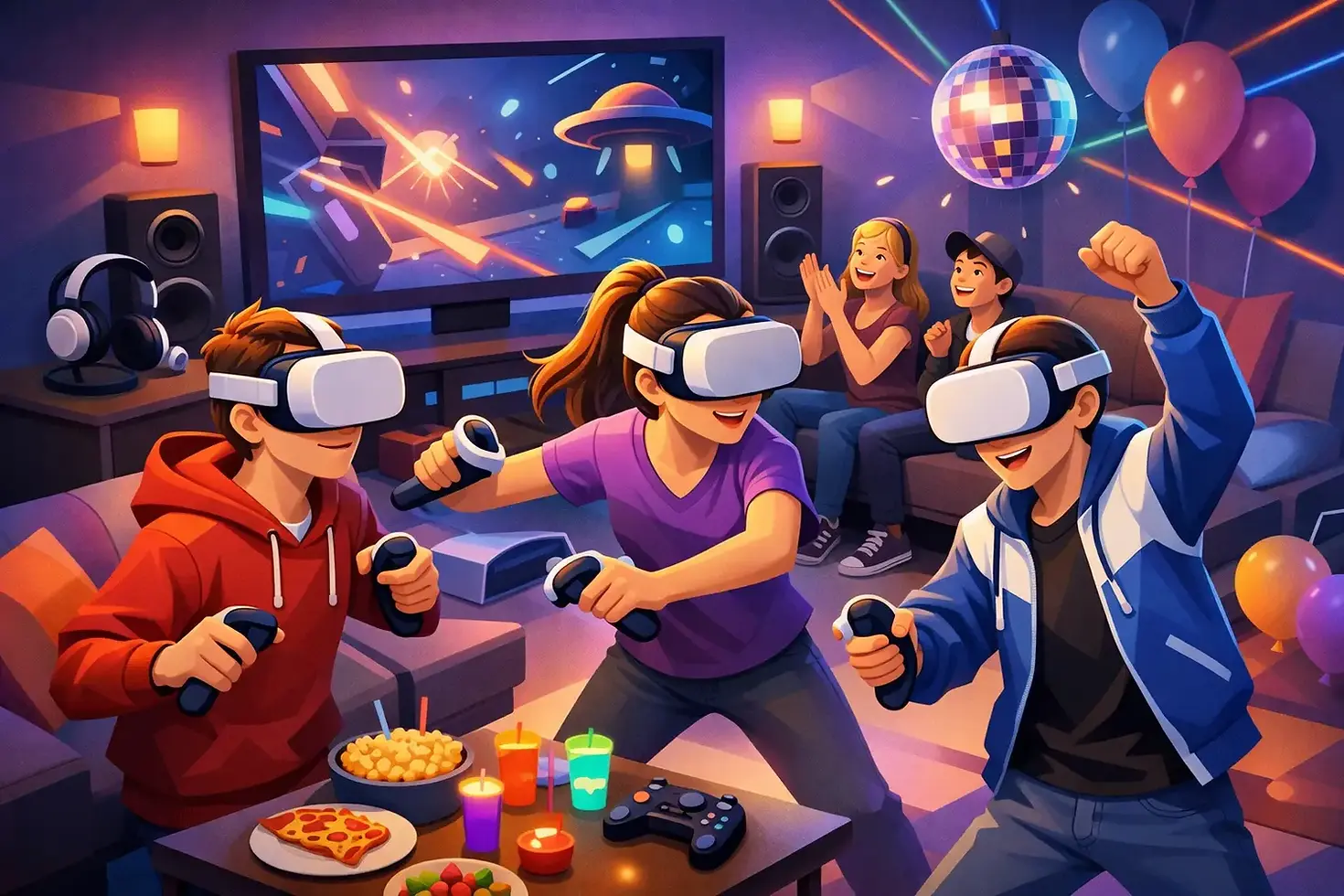
How to Host a Teen VR Party That Hits
A teen party can go sideways fast. If the plan feels too young, they check out. If it feels forced, they spend the whole time on their phones. That is exactly why so many parents end up searching for how to host a teen VR party - it gives the group something bigger than cake and decorations to rally around.
VR works because it is active, social, and built for reactions. Teens are not just standing around watching one person do something fun. They are moving, teaming up, competing, laughing, and talking about what just happened the second the round ends. When the setup is right, the party runs itself.
How to host a teen VR party without it feeling childish
The biggest mistake is planning it like a kids birthday party with a teen theme pasted on top. Teens want something that feels high-energy and a little more elevated. They want an experience, not a schedule packed with party games they outgrew years ago.
That starts with the venue. Home setups can sound convenient, but they come with real limits. Most at-home VR is built around one or two headsets, smaller movement areas, and a lot of waiting around while one person plays. For a teen group, that kills momentum. A location-based free-roam arena is a different category entirely. Everyone can jump into the action together, move untethered through a much larger space, and actually feel like they stepped inside the game instead of standing in a living room.
That difference matters more with teens than with younger kids. This age group can tell when something feels premium and when it feels patched together. If you want the party to feel exciting from the first minute, choose an experience that looks and feels like an event.
Start with the group, not the gear
If you are figuring out how to host a teen VR party, think about personalities before packages. Some groups want pure competition. Others want more teamwork and shared chaos. Some teens are already gamers, while others just want something new to do with friends.
A strong party works for all of them. That means choosing a VR experience with an easy onboarding process, staff support, and games that do not require experience to enjoy. The best teen parties are not built around who owns a console or who has played before. They are built around quick immersion, instant participation, and games that feel exciting within minutes.
This is also where a dedicated host or game master makes a huge difference. Teens do not want a long explanation. They want to get moving. A good team can keep things flowing, explain the basics fast, and help the group stay in the fun instead of getting stuck on logistics.
The ideal party flow
A teen VR party does not need a packed itinerary. In fact, too much structure can make it feel stiff. The better approach is a clean flow with enough time for the main event to breathe.
Start with arrival time that gives everyone a chance to check in, settle, and get excited together. Once the VR session begins, that becomes the centerpiece. This is the part they will remember, record, and talk about later. After that, leave room for the post-game energy - food, photos, birthday moments, and the natural replay of who won, who got surprised, and who had the biggest reaction.
That rhythm matters. If you cut the VR too short, it can feel like a demo instead of a party. If you overload the event with extras, the best part gets squeezed. Teens usually do better with one standout experience and a simple social hangout around it than with a long agenda.
Pick a venue that can handle teen energy
Not every entertainment venue is built for the same kind of party. Teens bring a louder, faster, more social energy than younger kids, and the space has to keep up. You want a place that feels polished, organized, and immersive from the moment the group walks in.
Private access is a major plus. It changes the mood immediately when the party feels like their event instead of a shared public activity. The same goes for staff who know how to guide the experience without hovering. Teens want freedom, but they also need a setup that keeps everything running smoothly.
If you are in the Manalapan area, a free-roam venue like Quantum Rift VR makes sense for this kind of event because the experience is built around group play, movement, and full-arena immersion rather than isolated headset time. That gives the party a bigger feel without making planning harder.
Food, cake, and timing still matter
The entertainment may be the headline, but the practical details still shape the day. Food should be easy, low-mess, and timed around the session rather than competing with it. Nobody wants greasy hands right before putting on a headset, and nobody wants the energy dip that comes from stopping the action too early.
It usually works best to let the VR session lead and handle food after, when everyone is ready to hang out and decompress. Pizza, finger foods, drinks, and cake still absolutely have a place. They just work better as the landing zone after the main event instead of the center of it.
This is one of those areas where it depends on your group. Some teen parties want a full birthday room setup with food and presents. Others want a cleaner, more activity-first format with just enough time afterward for snacks and photos. Neither is wrong. The best choice is the one that matches how your teen actually likes to celebrate.
Make it social, not just technical
When parents hear VR, they sometimes picture everyone isolated behind goggles. A great teen VR party is the opposite. The best experiences turn the group into the event. They are talking strategy, reacting in real time, and feeding off each other's energy.
That is why multiplayer matters so much. Shared missions, friendly competition, and cinematic group experiences create the moments teens actually remember. It becomes less about the hardware and more about the story they just lived through together.
This is also what separates premium VR from the old stereotype of one person playing while everyone else watches. In a strong party setup, the social part is not an extra. It is the whole point.
What parents should ask before booking
If you want to know how to host a teen VR party that feels easy on your end too, ask a few practical questions upfront. How many players can participate at once? Is the experience private? How long is the session? Are party hosts included? Is there space for food, cake, or post-game celebration?
Those details shape the experience more than flashy marketing language ever will. You are not just booking an activity. You are booking the flow of the event, the stress level of the day, and the quality of the memories that come out of it.
It is also smart to ask about the age range and comfort level for first-time players. Most teens do not need prior experience, but the setup should still feel welcoming for the friend who has never touched VR before. The right venue makes everyone feel ready quickly.
Keep the extras simple
You do not need custom merch bags, an overdesigned theme, or a dozen add-ons to make the party feel special. For teens, too much effort in the wrong places can actually make things feel less natural. If the main experience is strong, the rest can stay simple.
A few photos, a birthday dessert, and enough space to laugh about what just happened usually go further than a table full of party favors. If your teen wants a themed cake or matching shirts, great. If not, do not force it. The VR session is already the statement piece.
That is the real answer to how to host a teen VR party. Build the event around shared adrenaline, choose a venue that can deliver true immersion, and let the group experience carry the celebration. When teens get to step into another reality together, you do not have to manufacture excitement. It is already there.
The best party is the one they are still talking about on the ride home.


Comments